

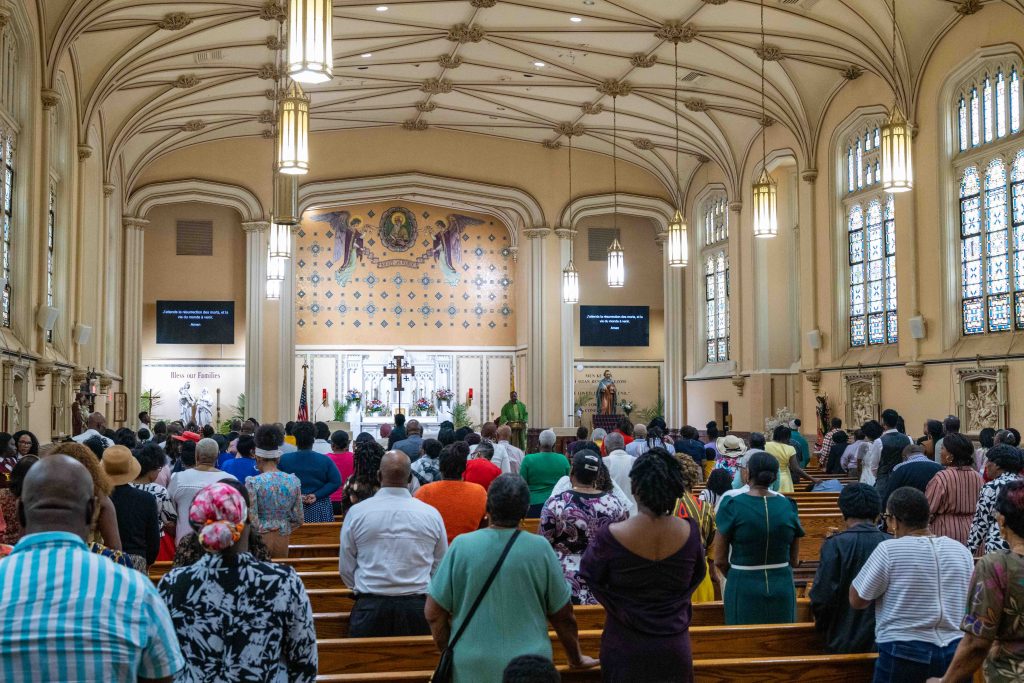
As Spanish-speaking worshippers were exiting St. Jerome Roman Catholic Church shortly before 1:00 p.m. on Sunday, dozens of Haitian immigrants waited patiently in the lobby for their turn to attend the next Haitian Creole Mass.
Outside, Flatbush Avenue moved at its usual pace. People hurried toward the Newkirk Avenue-Little Haiti subway station as B44 buses rolled down the street past bustling Caribbean shops — the hiss of their air brakes piercing through the neighborhood’s lively soundscape.
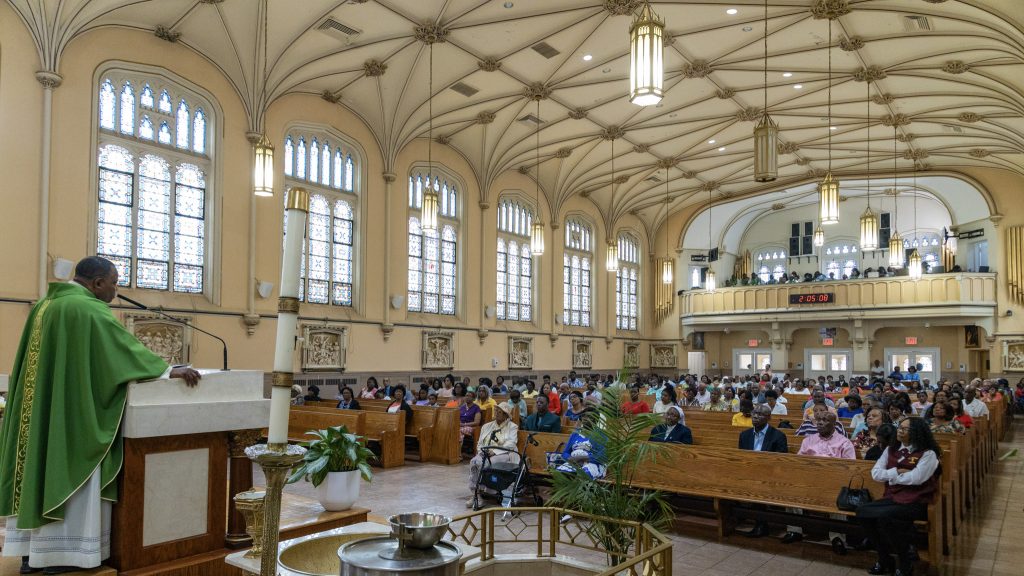
For many of the Haitian immigrants who were quietly filling the pews that morning, the church offered some solace after the Supreme Court ruled to allow the Trump administration to end TPS for Haiti and Syria. St. Jerome’s had always been a place where they could come to find community and try to make sense of what could come next.

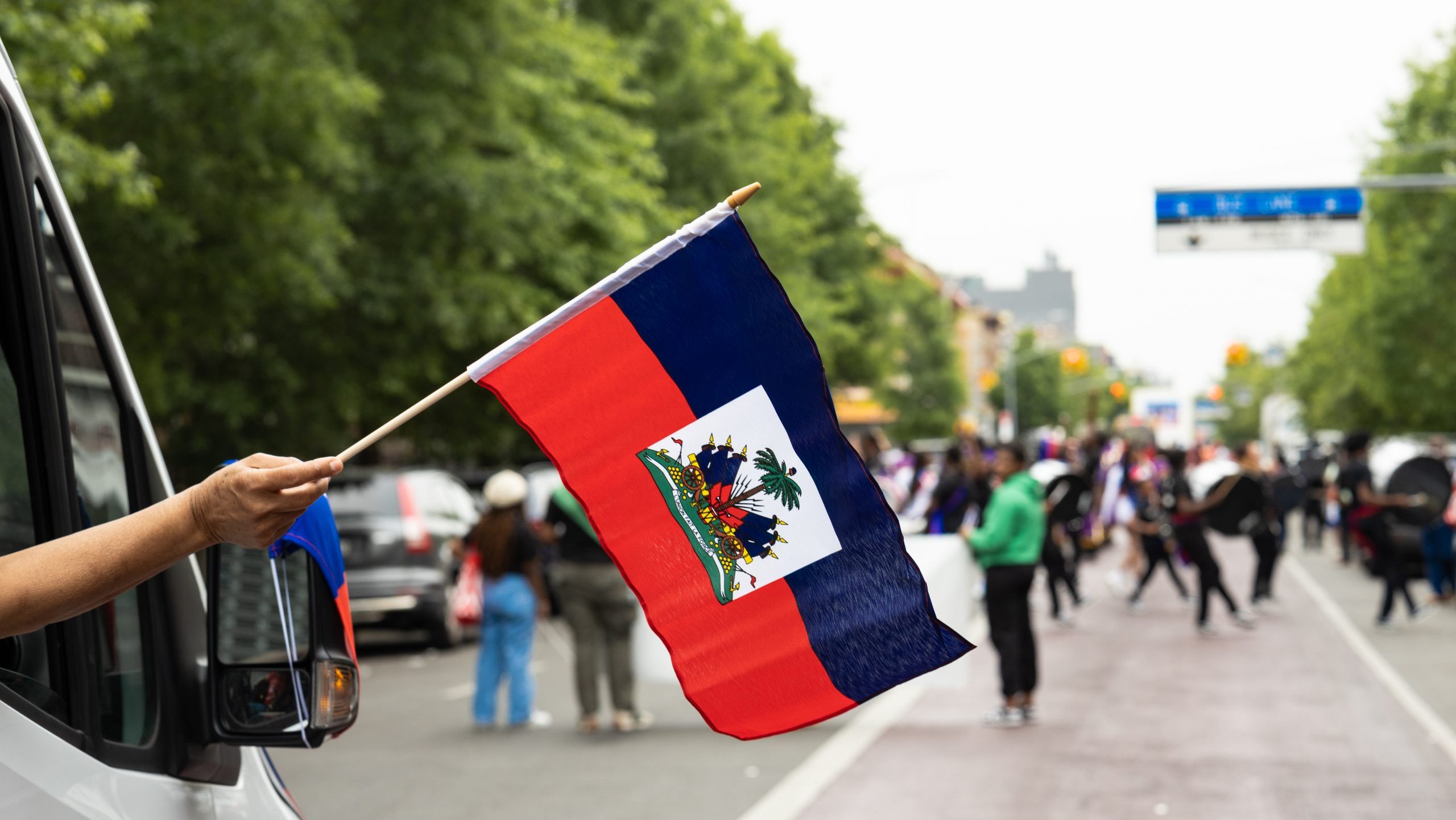
In the wake of SCOTUS’s June 25 ruling, about 350,000 Haitians nationwide are now living in a fearful limbo, many of whom have been living in the United States for decades. At least 5,400 Haitians live in New York City and around 56,000 in New York State.
Haiti first received its TPS designation in 2010 after a devastating 7.0 magnitude earthquake killed about 300,000 people and displaced more than 1.3 million. Since then, the country has endured additional natural disasters, political turmoil, and even the assassination of President Jovenel Moïse, which escalated gang violence that has displaced roughly 1.5 million people.
Even as it seeks to end TPS, the Trump administration continues to maintain a Level 4 “Do Not Travel” advisory for Haiti, warning Americans against traveling to the island nation because of crime, terrorism, kidnapping, armed gangs and a general widespread insecurity.
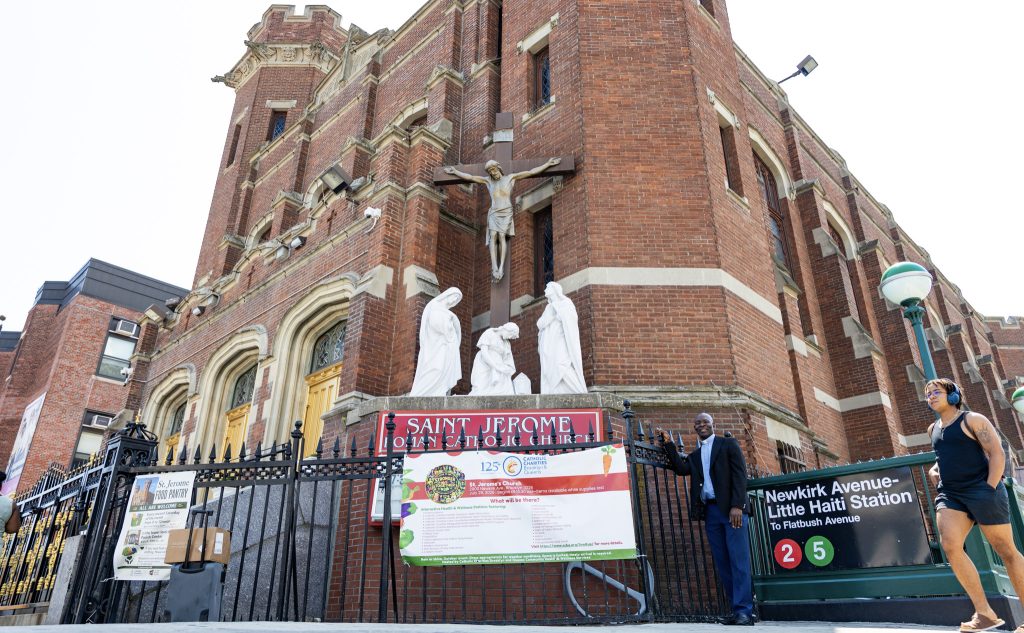
For generations of Haitians in New York, the St. Jerome parish became a place where they could bring their families together to celebrate baptisms, mourn the loss of loved ones, seek food assistance or advice — and in moments of uncertainty, search for hope.
The Catholic parish was founded in 1901, over half a century before Haitians fleeing the Duvalier dictatorship began arriving in New York in large numbers. Over time, the neighborhood surrounding the church grew into one of the country’s largest and most vibrant Haitian communities. In 2018, New York City officially designated the neighborhood as Little Haiti.
Today, St. Jerome’s parish is a reflection of the immigrant community surrounding it. Masses are offered in English, French, Haitian Creole and Spanish, catering to English-speaking Caribbean immigrants, Haitians and Latino families.
For many Haitian newcomers to the city, it is their first stop.
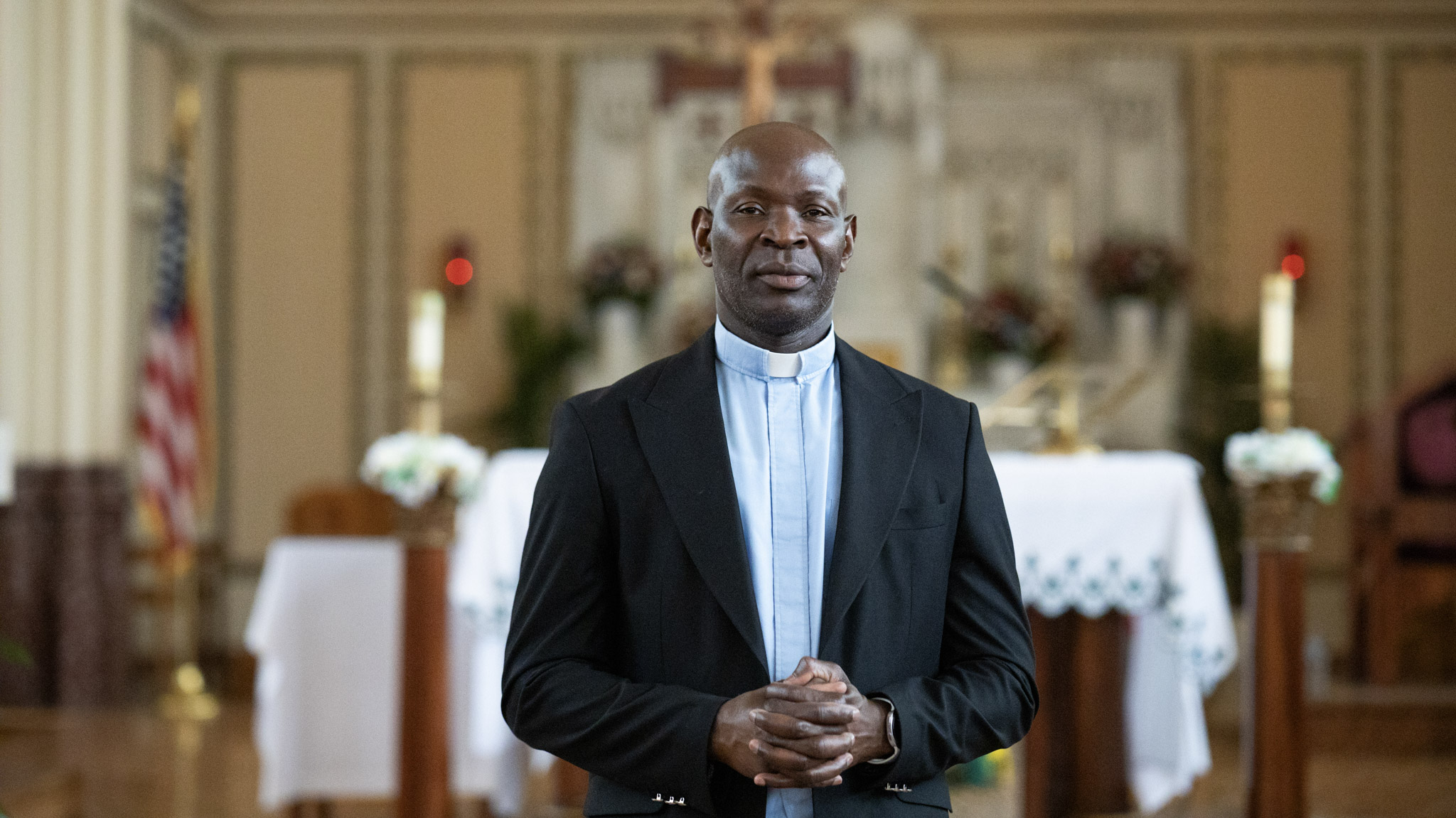
“St. Jerome is the first place Haitian immigrants come to when they arrive in New York,” said the Rev. Fr. Hilaire Belizaire, the church’s pastor. “This place is the heart of this community.”
The church’s ministry extends well beyond Sunday morning worship. It distributes food to about 200 families in the community, connects immigrants with legal services and helps parishioners understand their legal rights. As immigration enforcement has intensified and ICE street arrests have skyrocketed across the city, Belizaire said, people have grown more fearful.
“Their concern right now is what is going to happen,” he said. “We provide advice like how to prepare their children in case of family separation and educate them about their rights.”
In the last year or so, Belizaire said he has also watched the congregation change in quantifiable ways. Before President Donald Trump returned to office, he said, the church’s two Haitian Creole Masses routinely drew between 800 and 1,000 worshippers every Sunday. Attendance has since fallen.
“This number shrank a little bit because of all that’s going on,” he said.
This past Sunday carried another layer of emotion. It was the final Mass at St. Jerome for the Rev. Fr. Jean-Augustin François before his transfer to another parish in Queens. What was initially meant to be a gentle farewell homily became something else entirely.
“Whatever happens, Haiti will not perish,” he told the congregation of a few hundred with conviction. “No matter who upsets you, they are not in power forever.”
Speaking in Haitian Creole, François denounced what he described as the arbitrary nature of the Supreme Court’s decision. He reminded parishioners that Haitians have endured discrimination before, recalling the turbulent years when they were wrongly stigmatized during the HIV/AIDS crisis. He also spoke about Haiti’s current reality, where gangs control large swaths of the country and the main international airport has been closed.
“Our strength is in unity,” he said.
He then reached back more than three decades, invoking a defining moment in Haitian American history. On April 20, 1990, tens of thousands of Haitians marched across the Brooklyn Bridge to protest a federal policy that barred people born in Haiti from donating blood because they were deemed at elevated risk of carrying HIV — Fr. Belizaire was among them.
He had arrived in the U.S.that same year through a family reunification program while studying philosophy at Brooklyn College.
“These issues have always been there,” Fr. Belizaire said later. “They don’t see us for who we are. The discrimination is now more obvious.”
Now 59, Belizaire has spent more than two decades leading immigrant parishes across New York City. Before arriving at St. Jerome two years ago, he served for about 13 years at Sacred Heart of Jesus Church in Cambria Heights, where the Haitian Americans United for Progress (HAUP INC), the city’s oldest Haitian immigrant organization, was founded.
He sees the current immigration debate as part of a much longer story — one that is far from over.
“It’s basically spiritual warfare,” he said. “What’s happening with this ruling is so inhumane.”
“It’s not an issue about Haitians,” he added. “It’s about humans, Blacks and Browns.”
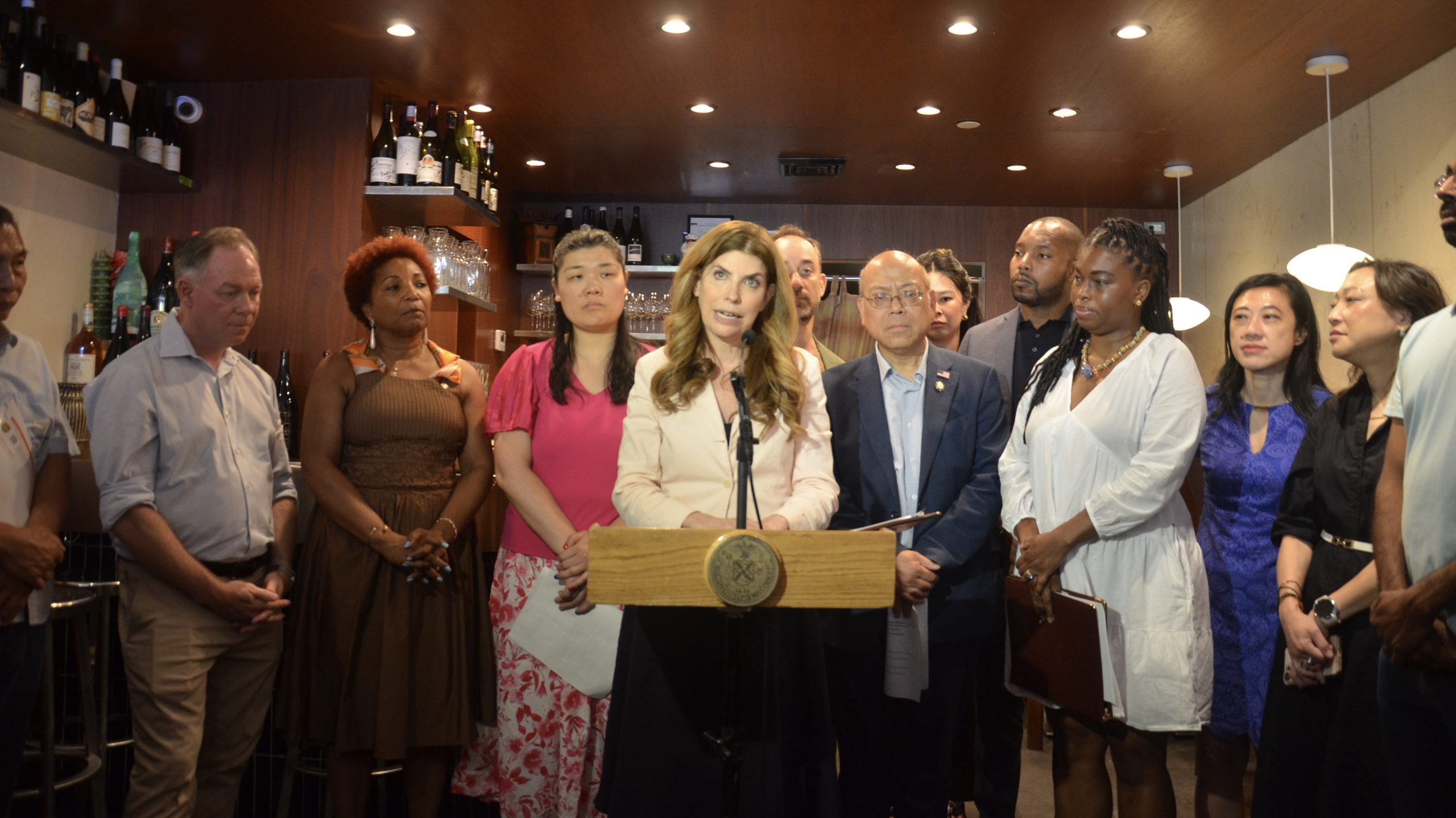
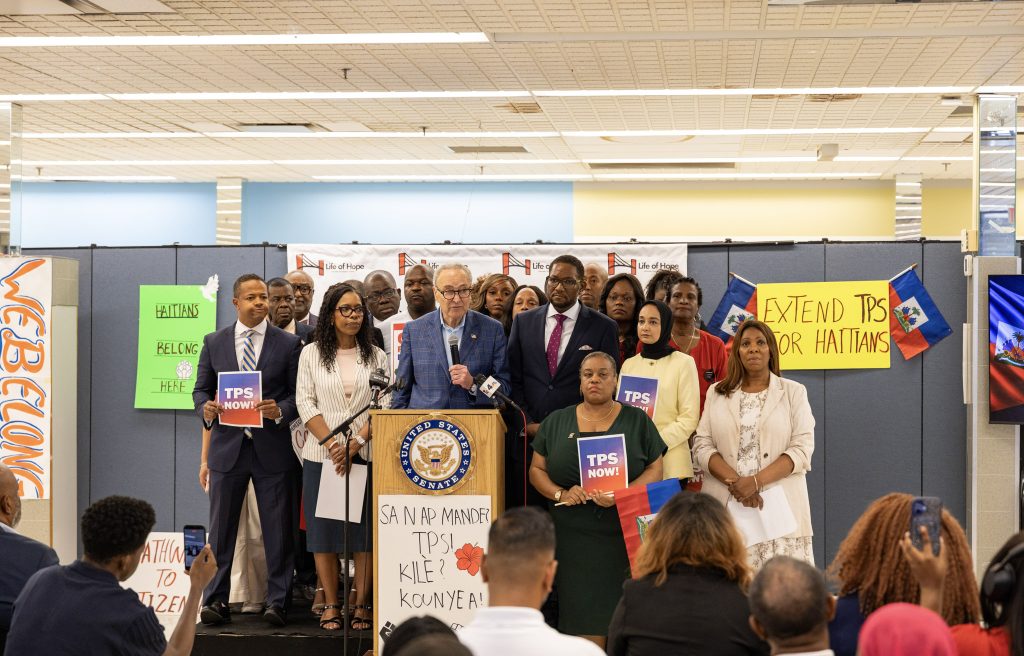
Less than 24 hours after Sunday’s Mass, Belizaire stood alongside elected officials, labor leaders and immigrant advocates at a Brooklyn press conference urging the Senate to approve legislation extending TPS protections for Haitians.
“We are here today to demand the Republican leader of the Senate, John Thune, put S. 4814 on the floor of the Senate, and it will pass,” said New York State Senator Chuck Schumer. “All we need is four Republicans and it will pass.”
S.4814 is a bipartisan bill that passed the House of Representative on April 16, 2026. This legislation aims to designate Haiti for TPS for another three years.
The following morning, Belizaire returned to the altar. The contrast with Sunday was obvious. While hundreds had filled the church, only 42 people attended the 9 a.m. Tuesday Mass in the lower church. Most were elderly people. But Belizaire’s message was not diminished.
He again addressed the uncertainty hanging over his congregation.
“Do not fear, for I am with you,” he said, repeating the biblical passage that anchored his homily.
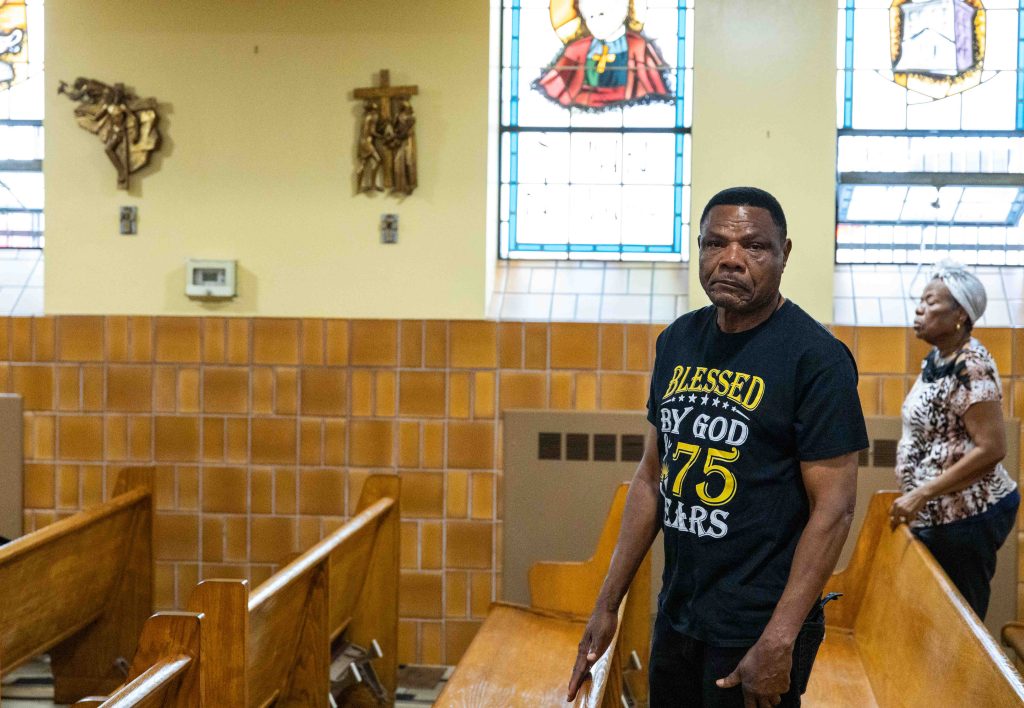
Andre Innocent, 75, stood quietly during the sermon, nodding slightly at times. He came to New York in 2024 under the parole program for Cubans, Haitians, Nicaraguans and Venezuelans (CHNV) and later benefited from TPS.
“The decision regarding TPS impacts all of us,” he said in Haitian Creole. “We are all in distress and praying together. Prayer is the key; it can work miracles.”
For more than a century, St. Jerome has steadfastly stood through waves of immigration, discrimination, political upheaval and change in the neighborhood around it. Another crisis had arrived at its doors.
“The church has always been the heart of the community,” Belizaire told the congregation. “It will always be there. We are all together in this. We will always stand for what is right.”